Showing posts with label Musical Pilgrimage. Show all posts

Tuesday, March 07, 2023

It hadn't been the most active research pursuit, but I had always willed a connection between Freddie Mercury and the V&A Museum. Perhaps it was a fanciful wish to link the two, since it's the museum I love and work for. It wasn't an implausible link either, there was that story about him taking the band to the Tate Britain to see Richard Dadd's The Fairy Feller's Master Stroke, so why wouldn't Freddie drag his friends to the V&A? I think we've all done it.

I was watching a Freddie documentary earlier this week when the anecdote I had longed for materialised. In A Life in Ten Pictures, Freddie's former girlfriend, Rosemary Pearson, spoke of their visit to the V&A together to see a ballet exhibition. It was a part of a project they had been working on at the Ealing School of Art. I had to wind it back a couple of times to see if I hadn't misheard anything. Had I found my story of Freddie at the V&A?

I looked back at the history of the V&A's exhibitions and calibrated the dates - the only ballet exhibition that could have coincided with Freddie being at the Ealing School of Art was Ballet Illustration: 1581-1940, which was on between 13 April and 1 October 1967. I checked the catalogue out at the British Library that night.

When I sat down at my desk, I wondered what on earth I expected to find exactly. Through all these elaborate set designs and elegantly drawn lithographs, there was some desire for an uncovered link, a moment that hadn't been fettered by some other fan or documentarian.

Page after page, there were smatterings of familiarity, but that was to be expected. So much of it seemed to be connected with Queen's aesthetic, whether it was sumptuous rococo stylings or the checks of the Harlequinade. I turn the page: Scharamuza. I flip back to the description: "Scaramouche brings on to the stage two small baskets, in which are concealed two small scaramouches. He then dances a measure, at the end of which he opens the baskets and is surprised to see what they contain..." Could that be the Scaramouche from Bohemian Rhapsody?

Johann Georg Puschner, Scharamuza, 1716

As I approached the end of the catalogue, towards the early 20th century designs with the Ballet Russes, I came across a costume design by Alexandra Exter from Don Juan in 1927. It was black with a band of white, asymetrically cut across the chest. The resemblance was startling, it's just like a costume Freddie wore on stage in 1972. There were slight modifications to the trousers and the right sleeve, but it looked almost the same. The influence was there and I couldn't deny it.

Alexandra Exter, Don Juan stage costume, 1927

Freddie Mercury at Imperial College, 1972

I sought out Rosemary Pearson, now known as Dr Rose Rose, and asked about her recollections about their visit. She kindly sent over her memoir, but there wasn't any detail about gallivanting through the Cast Courts, not as I had imagined it. Instead she wrote about the two of them poring over that same exhibition catalogue. She described how Freddie became entranced by its contents, crying out: "Bakst, Balanchine, Diaghilev, the names sound so delicious – so are the costumes! God, there's so much androgyny here. I'm going to swoon, DARLING! Catch me in your arms as I faint, it's all too perfect... and so CAMP!" 

In what seemed like a living scene in the middle of the studios of the Ealing School of Art, Freddie became entranced by the costumes of Nijinsky's Scheherazade and Diaghilev's Après-Midi D'Une Faune. He pretended to pass out on the studio floor, swooning: "Dancing in that gear must have really challenged male-female boundary stuff, even in the theatre!" The chapter ends with a painting of that moment of inspiration at the Ealing School of Art, mythical figures spring to life in the middle of the studio floor.
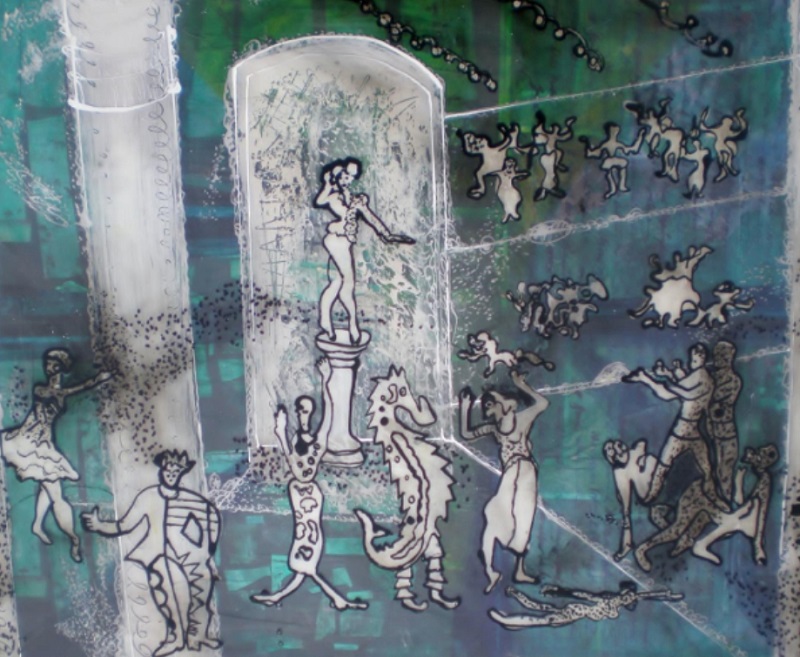
Dr Rose Rose, Painting of "Taking inspiration from the V&A Exhibition visited with Freddie: Ballet Designs and Illustrations: 1581-1940"

In the documentary, Dr Rose Rose wrote about Freddie's fascination with Eadweard Muybridge's photographic series of two semi-nude men wrestling. In an odd coincidence, I just written about Muybridge at work. I hadn't realised this photograph represented another pang that Freddie's sexual curiosity, but there are many moments like this in the memoir. Suddenly you are very close in to this relationship filled with contradiction and nuance. 

It became very intimate, and whereas before I asked, did they even come here? I was left asking, should I even be here?

Addendum: Here is a portrait of Freddie in Rose Pearson's V&A travelling exhibition poster, Gothic Woodcarving in England. It was submitted as an end-of-year-project at the Ealing School of Art in 1969.

Cassettes & Chocolate Milk: Italo Disco Podcast #69
Vivien Vee - Americano (12")
The Creatures - Hard in the City
Retronic Voice - Deciding the End
Alter Ego - Just Like a Star
Dua Lipa - New Rules (Initial Talk 80s Rules Remix)
Den Harrow - Mad Desire
The Hurricanes - Only One Night
Vanelle - Tell Me (Radio Remix '22)
Vincenzo Salvia - Night Signs
Michael Maltese - It Isn't Changed


Wednesday, February 08, 2023

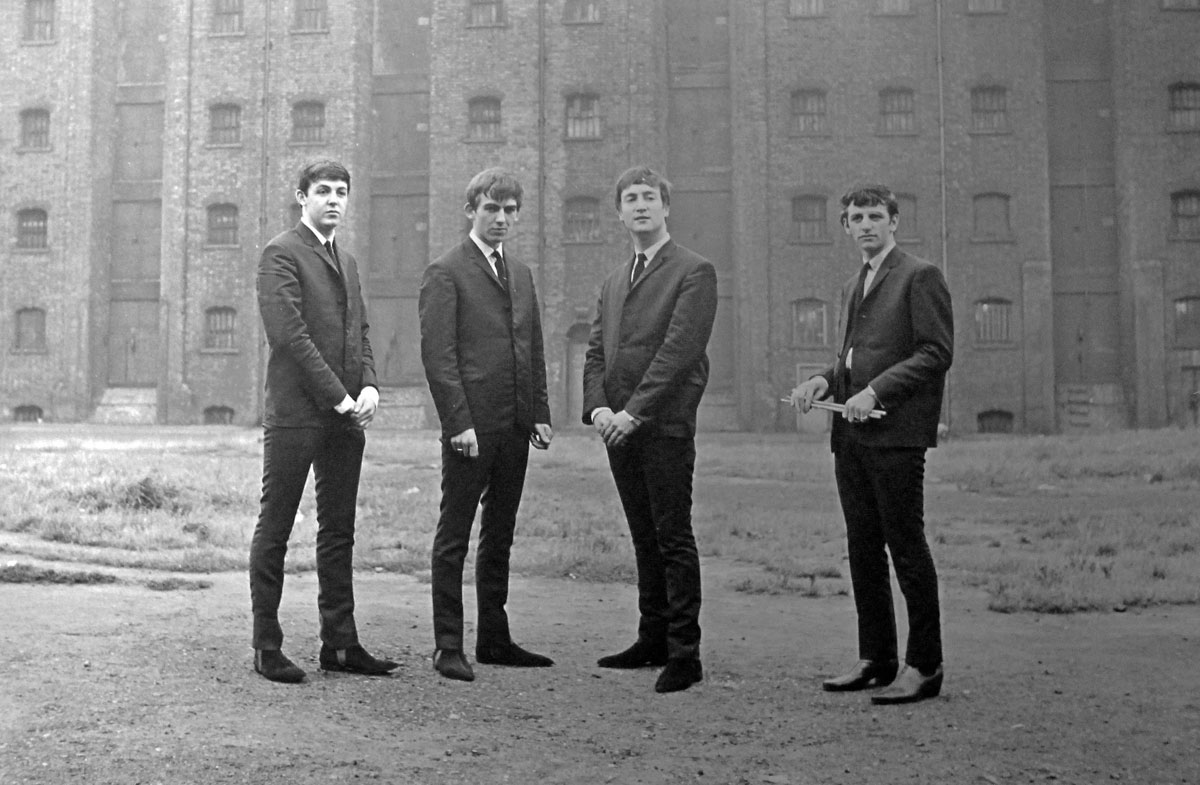
When I visit Liverpool, I'm prepared to go anywhere Teatle Huw is willing to take me, and on this occasion, it's the exterior of an abandoned tea warehouse where the Beatles once posed for a photo shoot. He furnishes the photographs of the Beatles in question, like we are gumshoe detectives familiarising ourselves with the case at hand. I don't recall ever seeing these photos before, but I clocked that it must have been early, and it was, 1962, in fact. There they stood in their suits, amongst the overgrown grass and the rubble.

The backdrop is cold and austere and were it not for the Beatles, it could be a photograph from the 1890s. There are variations of the photo at hand, in one they look more taciturn, standing several feet apart from one another, Ringo holds his drum sticks in vain, I imagine he is ready to attack if any unscrupulous characters were to approach. In another shot, they are much more lighthearted, John is mansplaining something to George, Paul is visibly cackling and it's just beautiful. Ringo looks on in amusement. You wonder what they were talking about, you wonder why they were there... 


A magical Teatle time for all...

We approach the site in question. It isn't far from the docks. We quickly realise the sightline is obstructed by the back of one-storey industrial estates on Saltney Street, so we take a closer look on Dublin Street. Teatle Huw informs me that this was not only a Beatle location, Bob Dylan came here too - his photos reveal a much more Victorian outlook, interacting with the scene and posing with street urchins. The building itself looks more dilapidated - sprigs of greenery appear from the jail bar windows and corroded copper doors. There's illegible graffiti tags, but it's a million miles from the loving inscriptions at the wall at Abbey Road Studios.

Teatle Huw takes a photo of me by the factory, allowing a sunflare to dramatically filter through. Teatle Huw would later use his stealthy Photoshop handiwork to scale himself down so he is very, very far in the background, gleefully photobombing the band. I tweet: "Today we investigated an abandoned tea factory where the Beatles made their own Teatle pilgrimage!" It's a thoroughly farcical prospect, but posing it in such a way seemed rather plausible, especially given their undeniable love of tea.

Less than a month later, I am in the audience for a preview of Mark Lewisohn's talk, Evolver '62. Late in the talk, this very photo comes up on the screen (although Teatle Huw is unfortunately omitted from the background). I hold my breath as I hear the truth behind this rare Teatle pilgrimage: it was actually a photoshoot to promote their first single, Love Me Do, which had just been released by Parlophone in October 1962. The curious thing about this photograph is that although John Lennon is actually standing in the spot where his great-grandfather James Lennon had settled with his future wife, Jane McConville. Around 1849 they had settled in Saltney Street. There, they lived in cramped squalor, where typhus, dysentery and cholera swept through the community.

But why were the Beatles there in 1962? Lewisohn said something to the effect that it looked cool, and I suppose that's reason enough to do anything. Despite the lack of tea in their real motive, the photoshoot suddenly take on a poetic dimension: The Lennons survived, this is who John became, little did he know what he was about to become...

Cassettes & Chocolate Milk: Yugowave Podcast #68
Neki to vole vruće - Teška Vremena, Prijatelju Moj
Data - Neka Ti Se Dese Prave Stvari
Oskarova Fobija - Beli Dekolte
Videosex - Videosex
Max & Intro - Beogradska Devojka
Oliver Mandic - Smejem se a plakao bih
Denis & Denis - Ja sam lazljiva
Stil - Fiks Ideja

Download (75.2 MB)

Explore C&CM Podcasts 1-67 here

Wednesday, February 24, 2016

The Milk Diaries: Garden Lodge

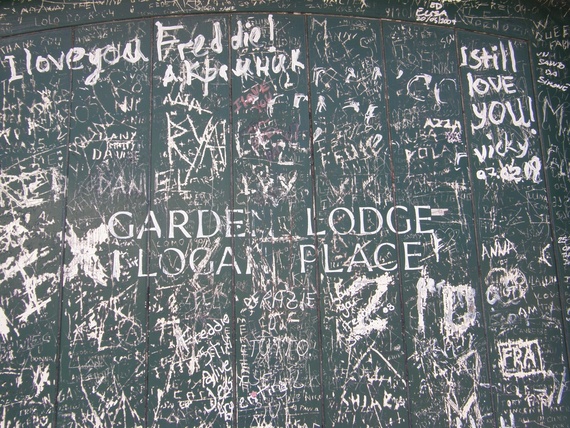
I had showed up at Freddie Mercury's home without a pen, which was OK because I found it so meditative just to read the dedications of others. Underneath the familiar serif type on that familiar green door that had been repainted over and over again, someone had written in a black sharpie, "Because you don't know what it means to me".

Freddie's door was filled with lyrical references, but I had never seen Love of My Life reframed in such a way. It seemed to sum up the powerlessness of standing there, attempting to honour such a significant musical presence. In light of this dedication, each scrap of paper, each line in liquid paper seemed to echo the same sentiment: "This was so important, but no one seems to understand..."


Monday, February 24, 2014

I have always been aware that when it comes to music from another country, there's always that slightly tacky, yet romantic prospect of the musical pilgrimage. I knew this, having pined for London each day between the ages of 5 and 20. The slightly-embellished story I've always told is this: upon my return to England, the first thing I did was take the southbound District Line service to Earl's Court tube station to visit Freddie Mercury's former home at Garden Lodge. Having initially taken a bus in the wrong direction, I had time to quietly contemplate what I would inscribe on Freddie's door. Yet as I stood before that ever-familiar dark green door with its loving messages scrawled and scratched over every square centimetre, I thought: "There's no way I could possibly articulate this..."

It's an alluring idea, to think that a place can be charged with significance and you might be able to sense that. I'll always recall the story I heard on a radio documentary about John Lennon's childhood home, Mendips. Now a museum, the caretaker described one particular young Japanese tourist who visited. Initially quiet, calm and polite, upon entering John's bedroom, she threw herself onto his bed and started wailing uncontrollably. Other visitors described how moved they were to be there, they described this feeling that took over them once they entered the house. In that way, the musical pilgrimage manages to align itself with the spiritual quality of a pilgrimage in the religious sense. Perhaps if I were more intuitive or had a greater sense of imagination, I could sense an importance, as opposed to simply being informed of one.

I love to consult the pilgrimages of Pete Frame's Rockin Around Britain, simply because the extreme level of research renders the spirituality of the musical pilgrimage void. I mean, I can't anticipate that anyone would venture out to the Permawrap cling film factory in High Wycombe simply because Howard Jones once worked in the stock control department. If anything, the fact that Frame has compiled such an enormously comprehensive resource indicates that culture is being created everywhere, in cities and villages, in halls and studios, even in squares and tube stations. It's a fact, but we're not always so inclined to react to any given locality in such a drastically emotional way.

Saying that, I'll rarely miss the opportunity to embark on one of these musical adventures. Not so long ago, I was sitting in a hotel room in Milan when my brother suddenly said to me: "Wait a second. Aren't the Paninaro kids from Milan?" I rushed to the baby laptop and replayed the promotional clip of the Pet Shop Boys' Paninaro - it became apparent that we had accidentally stumbled upon a place filled with musical consequence. I read out slabs of text, describing the 1980s youth culture. They seemed so glamourous, what with their insatiable appetite for American culture, designer denim and sandwiches. "They congregated around the sandwich bars at Piazza San Babila..." It seemed clear there was no turning back now: we were on a mission to find us some Paninaro kids.

The first thing we did the next day was venture out to Piazza San Babila. There was no abundance of sandwich, indeed there was nothing to indicate that anything had ever happened there. We walked over to the subway, recognising its inclusion in the Pet Shop Boys' video. Rafts of bored business men and tourists congregated together tightly, forming a queue by the gates and spilling out into the square. As we settled down to a bottle of milk at a nearby supermarket café, I thought about the Paninaro kids, who they were and what they might have become. One of them might have been in that crowd waiting for the subway to open, but we never would have known it. Perhaps if there were a plaque or something, a token boy in appropriate vintage attire, we might have felt differently about our failed excursion.

I've found, with my recent love of Kino and Viktor Tsoi that I've developed this desire to venture off to Russia and test this whole theory about musical pilgrimages. I'd love to go to Arbat Street in Moscow and be confronted with that heavily graffitied wall in Tsoi's honour. I'd love to deal with that struggle again, that difficulty in trying to honour the beauty and the relevance of their music. I'd love to go to Club Kamchatka, the Kino museum café bar in St Petersburg that was once the boiler room of the apartment block where Tsoi worked and lived. I might not ever develop a real appreciation of what it was actually like to be in the depths of the Russian underground rock scene, what it might have been like to see a gig or source a bootleg cassette, but I appreciate that are people who attempt to create such opportunities to remember those moments we unfortunately missed the first time round.

The Tsoi Wall by Charlie Radosna


Cassettes & Chocolate Milk: Soviet Pop Podcast #58
Yury Mukhin - Humouresque
Display - Foreign Lady
Electroclub feat. Victor Saltykov - You Marry Him, Do Not Go
Kino - Your Number
Aquarium - Rock n Roll's Dead
Rodionov - Electronic Jockey (Horse Racing)
Rodionov - Baroque (Fencing)
Forum - On the Next Street
Arsenal - Festival
Aavikko - Machu Picchu

Download (50MB)

Monday, October 29, 2012

I doubt I'll ever forget the precise moment I stepped onto the Westbound Platform at Earls Court tube station. It was seven years ago and I had just arrived in London, via Tokyo. The first thing I saw was an indie kid sitting cross-legged on the platform, with guitar case and sandy coloured rucksack featuring an intricate Queen crest, evidently drawn with black ball-point pen. Even though I was completely shattered, I couldn't help but smile to myself, London is just as I imagined it.

I had arrived with this heavy expectation that Londoners would get it. At that point, I had been so intent upon finding these musical connections, finding friends who shared a voracious passion for English pop. I never consciously realised that even then, the promise of that bond had become so essential to the mythology of a musical London. On some level, the musical pilgrimage celebrates that accidental occurrence of meeting someone and creating something great.

I've been rather fortunate in finding those connections, even momentarily. I grin when I recall discussions of Erasure in the muddy fields of Hyde Park or Johnny Thunders in an underground vault in Mayfair and Mr Flagio in a closing pub in Dalston. The thrill of the connection has never diminished, although I now find myself spoiled by local friends who share that voracious passion, who speak endlessly of an imagined London that we seem to have missed.

Joy Division by Anton Corbijn, at Lancaster Gate

I wouldn't say I've necessarily abandoned my search for the musically requited. Indeed, I think I've found a new way of loving that city, clinging to its meanings and associations in solidarity. There's something really potent about being alone on the London Underground, running down curved corridors, listening to songs which make everything seem so cinematic. The Piccadilly Trail on the Central Line, Automatic Lover on the Jubilee Line.

London promises more than I could ever articulate, but it's one of the reasons I find myself so desperately in love with the place. It's bound to be fraught with the threat of disappointment, what with its intense level of expectation. But even without the punks on the King's Road, without the pigeons at Trafalgar Square, without the fumes of Paddington station, it's a place that manages to fill me completely, in a way that far exceeds any passing discussion about music.

Cassettes & Chocolate Milk: London Podcast #49
The Smiths - London (Peel Session)
Elvis Costello - (I Don't Want To Go To) Chelsea
The Libertines - Boys in the Band
The Clash - Rudie Can't Fail
The Exits - Cheam
The Jam - Down at the Tube Station At Midnight (Live)
Eugene McGuinness - A Child Lost in Tesco
Pet Shop Boys - West End Girls

Download (41.1 MB)